School districts across Florida are grappling with a dilemma as they navigate the implementation of a controversial new book-challenge law. In the wake of this legislation, districts are reevaluating their book selection and teaching processes, potentially jeopardizing the inclusion of literary classics such as the works of William Shakespeare. Orange County, home to Orlando, has already restricted Shakespeare’s works for certain grade levels, and now the rest of the state is also facing potential limitations.
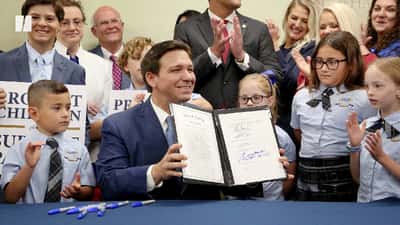
Under the new law, signed by Governor Ron DeSantis and effective from July 1, any material found to contain “sexual conduct” as defined by the state must be discontinued for any grade level or age group in which it is deemed inappropriate or unsuitable. This abrupt change has left educators like Kathleen Malloy, a school-media specialist in Leon County, concerned about the fate of Shakespeare’s works. Previously, the Miller Test, a three-prong method established by Supreme Court rulings to determine obscenity, guided the selection process. However, this test is no longer applicable.
The interpretation of the new legislation, known as HB 1069, suggests that school districts may risk breaking the law if they continue to use materials containing “sexual conduct.” This poses a challenge for Advanced Placement literature exams, dual-enrollment classes, and other educational programs that rely on a wide range of literary works. Even books regarded as valuable pieces of literature, with only a few isolated scenes falling under the “sexual conduct” definition, could face potential removal.
Districts are eagerly awaiting guidance from the Florida Department of Education on how to proceed, prompting some, such as Brevard and Hillsborough, to suspend their review processes until they receive official instructions. In the interim, book-access advocates are questioning districts’ cautious interpretations of the “sexual conduct” provision, with committees opting to err on the side of caution as advised by the Department of Education. However, this cautious approach is causing concerns about potential self-censorship and limitations on academic freedom.
The book-challenge law not only impacts book selection but also introduces a new process for parents who disagree with a school board’s decision. They can now request a special magistrate from the state to review the ruling, with the costs borne by the school district. This provision has raised worries that pressure groups may exploit this opportunity to influence districts without officially filing book challenges, potentially forcing districts to remove books to avoid the financial burden of a review.
Furthermore, school districts must promptly remove any challenged book containing pornography or sexual conduct within five days until the complaint is resolved. The lack of clarity regarding what constitutes “sexual conduct” has led to varied interpretations. For instance, Brevard County’s book review committee decided to remove three texts by poet Rupi Kaur due to sexual content, including drawings of outlined naked bodies. Similarly, Orange County Public Schools placed four Shakespeare plays on the temporarily rejected list, along with other widely taught books like “The Color Purple,” “Catch-22,” “Brave New World,” and “The Kite Runner,” citing concerns about sexual conduct.
Critics argue that Governor DeSantis’s signing of this law, alongside other bills perceived as targeting the LGBTQ+ community, has spurred a wave of book bans and restrictions. The governor, however, dismisses claims of book bans as a “hoax” and asserts that removed or restricted books are pornographic, violent, or otherwise inappropriate. Over the past two years, Florida has witnessed an increase in book restrictions and removals, partly fueled by conservative parents’ rights group Moms for Liberty, which provides lists of objectionable excerpts from targeted books.
In Leon County, Superintendent Rocky Hanna is cautious about inadvertently violating the law. In response to pressure from a local chapter of Moms for Liberty, Hanna recently removed five books he deemed to be in violation of state statute. He emphasizes that while he is not banning books, he does not want to become a target for the Department of Education and the governor. This incident exemplifies how activist groups exploit the vagueness of Florida law, labeling content as pornography and intimidating school administrators.
The removal of books deemed contentious by certain groups has raised concerns among advocates of academic freedom. Kasey Meehan, director of the Freedom to Read project at PEN America, criticized the removal of books based on vague laws, stating that it enables the targeting of books discussing sex, LGBTQ+ characters, or characters of color under the guise of combating “harmful ideology and overt sexualization.”
As the Florida Department of Education prepares to provide guidance to school districts, the future of literary classics like Shakespeare hangs in the balance. The outcome will not only shape the educational landscape in Florida but also have implications for academic freedom and the accessibility of diverse literature in schools across the United States.