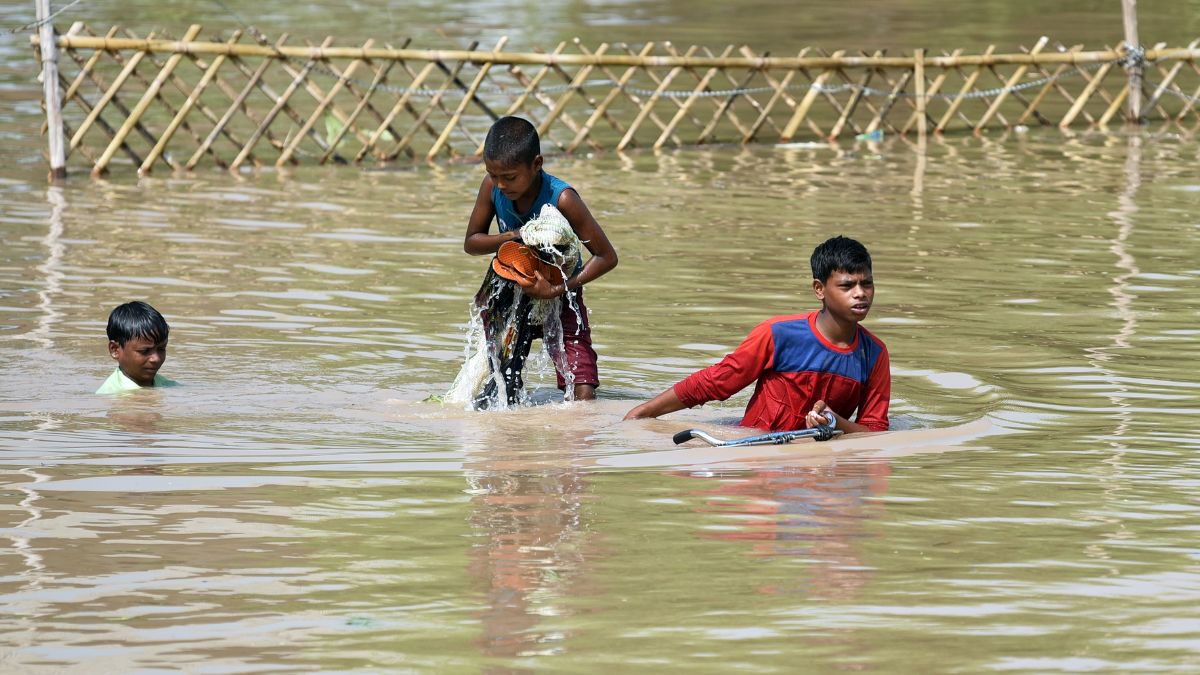
Low-lying areas in India’s capital city, Delhi, continue to grapple with severe flooding as the waters of the Yamuna River slowly recede. Despite the river’s water levels showing signs of decline on Saturday, several neighborhoods remain inundated, causing immense hardship for residents.
The incessant monsoon rains that have been lashing the region in recent weeks have led to the swelling of the Yamuna River, triggering widespread flooding in low-lying areas. Although the river’s water levels have started to decrease, the receding process has been slow, exacerbating the challenges faced by affected communities.
Residents in flooded neighborhoods are grappling with the consequences of waterlogged streets, submerged houses, and disrupted essential services. Many are struggling to navigate the submerged areas, while others have been forced to evacuate their homes in search of safer ground. The flooding has caused significant damage to infrastructure, including roads, bridges, and electrical systems, further hampering the recovery efforts.
Local authorities and disaster response teams are working tirelessly to provide relief to the affected areas. Rescue operations, including the deployment of boats and makeshift rafts, have been underway to evacuate stranded residents and ensure their safety. Temporary shelters have been set up to accommodate those displaced by the floods, offering them basic amenities and relief supplies.
Efforts are also being made to restore essential services and infrastructure. Electricity and water supply have been disrupted in many areas, requiring immediate attention to ensure the well-being of residents. Repair teams are working around the clock to restore these services, but the extensive damage caused by the floods poses a significant challenge.
The impact of the floods extends beyond the immediate inconvenience and damage. There is a growing concern regarding the potential outbreak of waterborne diseases due to contaminated water sources. Health authorities are actively monitoring the situation and providing medical assistance to affected individuals. Public awareness campaigns are being conducted to educate residents on hygiene practices and preventive measures to mitigate health risks.
The flooding in low-lying areas of Delhi is a stark reminder of the urgent need for improved urban planning and infrastructure development to mitigate the effects of heavy rains and ensure the safety and well-being of residents. The local government is being urged to take proactive measures to address drainage issues, strengthen embankments along the Yamuna River, and develop sustainable solutions to prevent such floods in the future.
As the water levels slowly recede, the focus remains on providing immediate relief to the affected communities and initiating long-term measures to prevent similar flooding scenarios. It is a collective effort involving the government, local authorities, and the community to rebuild lives, restore normalcy, and enhance the resilience of Delhi’s low-lying areas in the face of future challenges.